
City for Cars or City for People?


What Barcelona’s Superblocks (and Nordic Urban Experiments) Can Teach Us About Human-Centered Cities
What if we stopped designing cities primarily for cars?
Not as an abstract ideal.
Not as a utopian slogan.
But as a real, practical question about daily life, mental health, and human dignity.
Whether we admit it or not, city structure shapes how we feel.
· It shapes stress levels.
· It shapes social interaction.
· It shapes whether public space feels hostile or welcoming.
And in many contemporary cities, especially in the United States, the dominant answer has been clear:
Cities are designed first and foremost for vehicles.
Humans are expected to adapt.
A Radical but Simple Idea: Design the City for Citizens
Barcelona-based urban planner Salvador Rueda has spent decades advocating a different approach: designing cities for citizens, not merely for pedestrians and not primarily for cars.
He is the originator of Barcelona’s “superblock” model, implemented in multiple neighborhoods, including the Eixample district.

Superblocks (superilles) combine several conventional city blocks into one larger unit. Within that unit:
Through-traffic is pushed to the perimeter
Interior streets dramatically limit vehicle movement
Streets are reimagined as places for:
Walking
Sitting
Playing
Gathering
Cultural events
Daily life
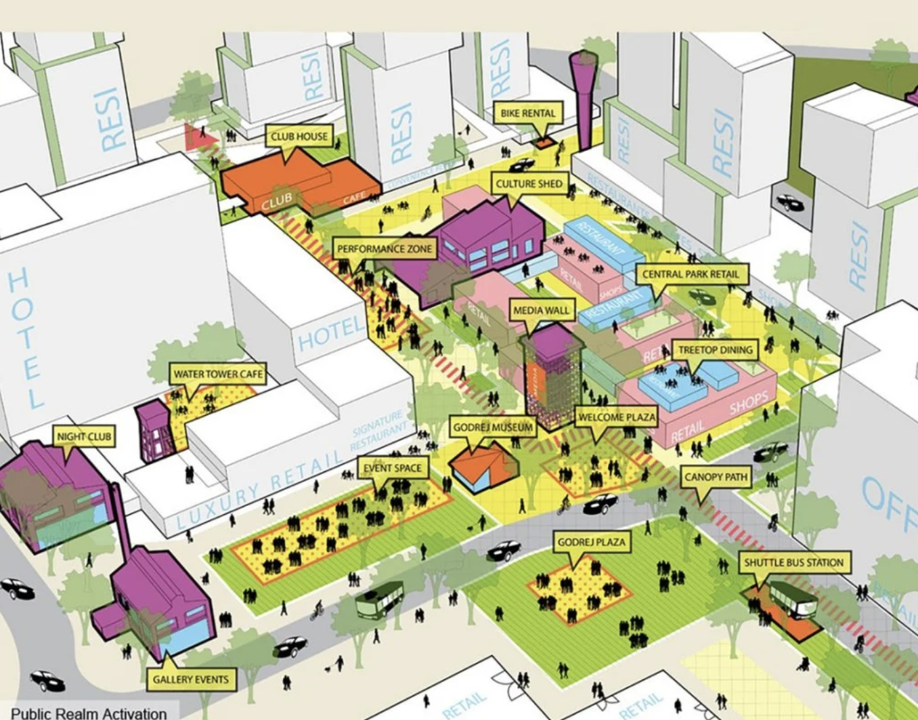

The conceptual shift is subtle but profound:
Streets are not only corridors of movement.
They are public living rooms.
Rueda has described this as the truly radical idea: identifying with citizens, not just with people in motion.
What Superblocks Have Shown
Studies and on-the-ground observations of superblocks point to multiple benefits:
· Reduced noise
· Improved air quality
· Fewer traffic accidents
· Increased walking
· More neighborhood-level social interaction
· Growth in local ground-floor businesses
Children begin to recognize other neighborhood children.
People linger.
Corners become places instead of leftovers.
None of this is particularly flashy.
Which may be precisely why it matters.


Why This Is Also a Mental Health Conversation
Urban form is not neutral.
A city dominated by fast-moving vehicles, noise, exhaust, and visual clutter places a constant low-grade load on the nervous system.
Conversely, environments that offer:
· Reduced noise
· Slower pace
· Greenery
· Places to pause
· Opportunities for casual social contact
support emotional regulation, not just mobility.
We often discuss mental health as an individual issue.
But a large portion of mental strain is environmental.
You cannot meditate your way out of a hostile streetscape.


The Car-Centered Inheritance (Especially in the U.S.)
The United States inherited and aggressively expanded a model of:
· Wide roads
· Large parking fields
· Single-use zoning
· Long distances
· Weak public transit in many regions
Cars became not just transportation, but cultural identity.
This makes conversations about reducing car dominance politically charged and emotionally loaded.
And yes, the U.S. is vast.
Yes, distances can be long.
Yes, public transportation reform is difficult.
All of that can be true.
And still:
We can question the assumption that every street must prioritize vehicles.
This Is Not About Copying Barcelona
The question is not:
“Can we turn American cities into Barcelona?”
The better question is:
What principles can translate?
Examples:
· Car-light zones in downtown cores
· Pedestrian-first corridors
· Neighborhood streets with limited through-traffic
· Intersections redesigned as small public plazas
· Street trees, seating, and planting treated as essential infrastructure
These are experiments, not revolutions.
But experiments matter.
Small Interventions Can Shift Experience
Alongside permanent planning strategies, I’m deeply inspired by lighter, more flexible urban interventions, temporary or semi-permanent structures, pavilions, and planted installations that insert softness into hard city fabric.
They send a quiet message:
This space is not only for passing through.
This space is also for being.
These types of interventions don’t require rewriting zoning codes.
They require imagination and political will.
But What About the Objections?
Yes, superblocks and car-reduction strategies face resistance.
Common concerns include:
· Reduced parking
· More difficult driving routes
· Rising housing prices in calmer areas
These concerns are real.
But they coexist with another reality:
Most people, after experiencing these environments, report improved satisfaction.
Change is uncomfortable.
Living in permanently hostile environments is also uncomfortable.
We tend to normalize the latter because we inherited it.


A Familiar Pattern
Historically, many improvements to urban life were controversial before becoming obvious:
· Sidewalks
· Public parks
· Zoning for light and air
· Indoor plumbing
· Building codes
Human-centered design often starts as “radical” and later becomes “of course.”
Superblocks may follow the same trajectory.
From Interior to City
As an interior designer, I spend much of my time thinking about:
· Light
· Acoustics
· Materiality
· Wayfinding
· Comfort
· Human behavior
But these concerns do not stop at the front door.
They scale outward.
Room → Building → Block → Neighborhood → City
At every level, we make choices that either reduce friction or add it.
Cities, like buildings, can either quietly support human life — or quietly exhaust it.
A Modest Proposal
What if we treated streets as social infrastructure, not just traffic infrastructure?
What if mental health, social connection, and everyday dignity were considered legitimate performance metrics for urban design?
Not as afterthoughts.
Not as “nice extras.”
But as baseline goals.
Closing Thought
The most radical idea may not be banning cars.
It may simply be this:
Cities exist for the people who live in them.
Not for the machines that pass through them.
When we design accordingly, we don’t just change streets.
We change daily life.
Less asphalt. More life.
With warmth and wonder,
Heidi


Comments